
Resource Hub
for Labour Law and Industrial Relations
for Labour Law and Industrial Relations
IR Share website is a multilingual resource centre providing documentation on industrial relations, including collective agreements concluded by the social partners at European, sectoral and transnational company level.
IR Notes:
Building a social Europe together
The IR Notes newsletter gives everyone in Europe access to an independent, reliable and impartial source of information on topics involving industrial relations.

As the planet burns, a French court issues a ruling inviting companies to take their due diligence plans seriously.
As the planet burns, a French court issues a ruling inviting companies to take their due diligence plans seriously. On 25 June, as France and much of Europe sweltered in a heatwave, the Paris Ordinary Court [Tribunal Judiciaire] issued a landmark ruling in the case...

Three questions for Delphine Rudelli
Three questions for Delphine Rudelli, Director General of CEEMET (*) On the delays in transposing the ‘pay transparency’ directive “We are calling for the application of the directive to be suspended while we assess what can be simplified – not to reduce rights, but...
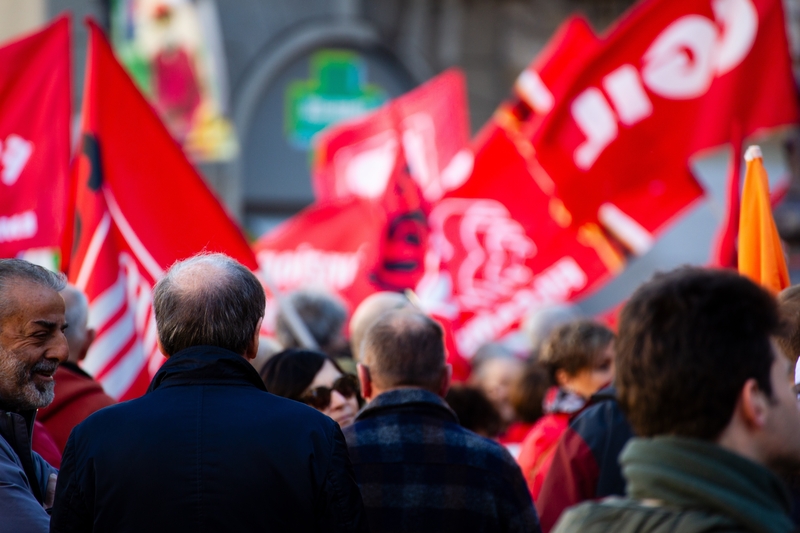
The right to strike is part of the fundamental right of freedom of association
In an advisory opinion published on 21 May, the International Court of Justice confirmed that the right to strike is encompassed in freedom of association, and is therefore protected under ILO Convention No. 87. In 1994, employers’ representatives at the International...

Less than a quarter of a century to eradicate poverty in the European Union
Eradicate poverty in the European Union The objective is an ambitious one, and it includes an intermediate stage: cutting the number of people at risk of poverty and social exclusion by at least 15 million by 2030. In other words, achieving the objective set in March...
IR Notes: an independent, reliable and balanced briefing note
IR Notes is an independent, reliable and balanced briefing note on industrial relations and labour law in Europe.
Published in 6 languages and sold by subscription, this newsletter gives you access to concise, targeted and practical information on the major themes of social Europe and transnational social dialogue.
With our experts and national correspondents, we adopt a dynamic, practical and useful approach to European social monitoring. We select the most relevant topics, which are a source of cross-disciplinary and inspiring ideas.

Accessibility
IR Notes is a tool for generating reflection, interaction and innovative solutions.

Expertise
A network of experts, researchers and national correspondents is involved in writing IR Notes, supported by a permanent team.

A Wide Audience
IR Notes is aimed at European Works Council members and HR managers seeking quality information in their own language, but also trade unions, employers' organisation, European institutions, research centres, etc...

Multilingual Support
IR Notes is published in 6 languages (English, French, German, Italian, Spanish, Polish), with the support of professional translators who ensure that it is produced to a very high standard in all of these languages, in a style that is easy to read. IR Notes facilitates transnational dialogue.
IR Doc:
Open access library
IR Doc is a multilingual resource centre providing documentation on labour law and industrial relations at European Union and Member State level, including collective agreements concluded by the social partners at European, sectoral and transnational company level.
European Works Councils
Here you will find all the European and national legislation that applies to European Works Councils (EWC), as well as studies, reports and, most importantly, the agreements establishing EWCs, their addenda and all kinds of texts provided to us by the social partners.
European Companies (SE)
Here you will find European and national legislation applicable to SE Works Councils (SE-WC), studies, reports and, most importantly, the agreements establishing SE-WCs, their addenda and all kinds of texts adopted by SE-WCs, provided to us by the social partners.
European Social Dialogue
Social dialogue refers to ‘discussions, consultations, negotiations and joint actions involving organisations representing the social partners – employers and workers’.
Here we provide the "fruits" of the different levels of social dialogue.
Industrial Relations
Industrial relations cover interaction and social dialogue, between organisations representing workers and employers. Here, you will find mainly documents related to industrial relation issues at European level and company-level.
IR Research:
Informing decision-makers
As Eurofound's National correspondent, IR Share provides information on working conditions, industrial relations, and the labour market to support the EU institutions and bodies, Member States and social partners in shaping social Europe, as well as promoting social dialogue on the basis of comparative information and research.

Building on growth potential: Preparing the construction sector for the twin transitions
The dual digital and green transition is one of the European Union’s priorities. In the construction sector, this transformation presents both a challenge and an opportunity to adapt buildings, jobs and skills to European objectives. The Energy Performance of...

Eurofound: AI has become a subject of collective bargaining
Fed by its network of correspondents, Eurofound published, on 26 September 2025, a study about the emergence of AI as a subject of collective bargaining. The report analyses the various levels of social dialogue that have approached the AI topic: European...

Eurofound: Digitalisation of social protection
On October 28, Eurofound published a study on the digitalization of social protection in the European Union and Norway, to which IR Share contributed as the national correspondent for France. While the EU's “Digital Decade” program sets the goal of digitalizing all...
IR Training:
Strengthening social dialogue
Members of the IR Share team are regularly called upon to devise training course. We deliver these either directly or working together with partners, to ensure that the training is tailored to the exact needs expressed.
Sensibilisation du bureau du CE européen d’Eiffage à la RSE
IR Share a animé, le 29 juin, une formation sur la RSE pour le CE européen d'Eiffage. La journée de formation a été marquée par deux interventions importantes. Dans la matinée, Anne-Valérie Cornuault-Goulard, responsable de la RSE au sein de la direction d’Eiffage, a...

CERBA’s training
On 21 and 22 April, CERBA’s Group Negotiation Team met to prepare its European Works Council (EWC) agreement.The negotiation phase is crucial: it identifies the group’s needs, takes account of its specific characteristics, and defines the main elements to be included...
Engie’s european committee’s training course
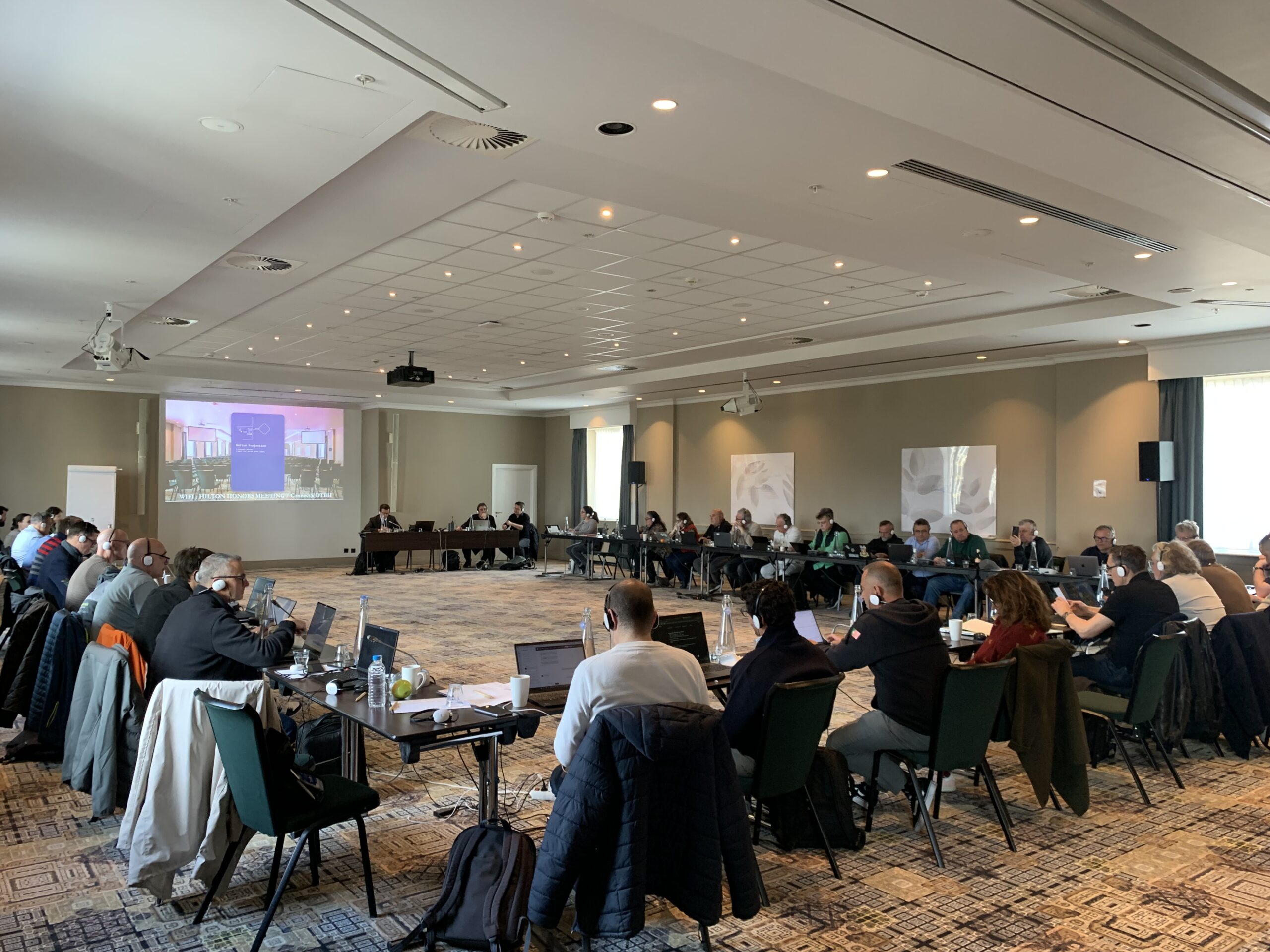
From 23 to 27 March, the European committee of Engie attended a week-long training course in Brussels, organised by IR Share from start to finish. The course covered both the educational and logistical aspects, including booking the hotel and meeting room, managing...
Strengthen your EWC
We support EWCs to play their role to the full and beyond!
For more than 15 years, we have been developing training courses for European Works Councils or SE Works Councils throughout Europe. Our network of partners enables us to organise the logistics and provide an all-in-one service.
Behind the Training
Suez EWC Training for a fair green transition and decarbonisation
Step behind the scenes at the Suez EWC Training held in Paris on September 11–12, 2024, and discover how our interactive approach is shaping the future of European social dialogue and transnational cooperation.
IR Club:
Club CE européens -
EWCs Club
Since 2011, the European Works Councils Club has sought to co-construct the foundations of a European social dialogue that can meet the social and environmental challenges faced by transnational companies.
01
Our DNA: the EWC Club allows managers and employee members of EWCs from different trade unions and professional branches to meet in a unique space for dialogue.
02
Anticipate the challenges of tomorrow : you can rely on the community to understand common issues through collective intelligence and benefit from a European-level strategic monitoring.
04
Exchange ideas about your practices: benefit from the practical experience of other members (organising meetings, translation, interpretation, etc) to help you execute your projects effectively.
03
Gain skills: address more technical issues collectively.
Get in Touch
Let’s talk about your ideas and suggestions.
Drop us a line via the form below and we’ll get back to you.
Follow us on social media

